
I have written many times about my experience of life imitating art with regards to my debut middle grade novel, Another Kind of Hurricane – how I researched diligently as I wrote and rewrote the story; how I felt like I had done a thorough job of it; how I felt like I had found a deep place of empathy and understanding for Zavion, my main character who lives in New Orleans and who lives through Hurricane Katrina; and how, in one day, everything changed. Tropical Storm Irene swept through my town – and very specifically my block and my house – and I was suddenly and amazingly inside my story.
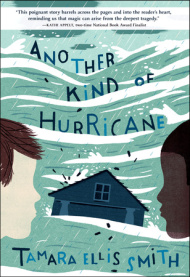 I have also written some about what I learned through that odd, reverse process of the art experience coming before the life experience. First, my two main characters, Henry and Zavion, are strangers when the story begins. They are strangers from two very different places – geographic and internal – and yet the only traces of solace they eventually find are in one another. They become connected and they become friends. This happened to me during Irene too. Important lesson #1, a reinforcing lesson: I got that connection piece right in my book. Second – oh boy – the visceral and emotional experience of living through a flood (and the subsequent recovery from that flood) is intense, to put it mildly. And Katrina was so much more…everything…than Irene. Important lesson #2, a reminding lesson: striving for knowledge and empathy, while accepting that I might not be able to totally get it – is truly the best I can do. Maybe another way to put this is knowledge and empathy and a good dose of humbleness is my best practice when I write anything outside of my direct experience.
But is there more to it than that? And how does this all fit within the conversation about diversity we’ve all been engaged in? Does it offer anything new or useful to that dialogue?
Amy Koester, who has a blog called The Show Me Librarian, wrote a post in February of this year titled Selection is Privilege. It’s spot on, in my opinion. In it, she talks about the frustration she feels when colleagues take “diverse”** books out of their libraries, or simply don’t buy them for their libraries because they feel they either a) don’t have enough diverse patrons to read those books or b) their non-diverse patrons don’t have any interest in those books. She then said this:
When it comes down to it…selection is a privilege. If you select materials for your readers, you are privileged to get to influence not only what children read, but what they have access to in the first place. And when I read arguments against including diverse titles, or questions about why we have to talk about this topic, it puts into sharp focus for me the fact that we have to recognize our privilege as selectors, and, more than likely, as white selectors for diverse readers.
I feel like this extends to us writers too. Or I’ll only speak for myself – to me as a writer. If I am to have the great fortune of having any sort of influence over kids, then I must recognize my privilege. In an interview over at CBC Diversity, agent and author Tanya McKinnon cited some neurological research:
“The thing that reduces hate and increases acceptance of diversity is knowledge and rational thought. The more we use our pre-frontal cortex, the seat of rational thought, the more likely we are to reduce hate. That’s why reading about difference, especially at a young age, is so very important. And it’s why racially inclusive children’s books are so crucial for a rational and tolerant society.”
And there it is. If there was ever a reason to use my privilege – as a white, middle class woman, but also simply as a writer fortunate enough to get a book published, really – well, there it is.
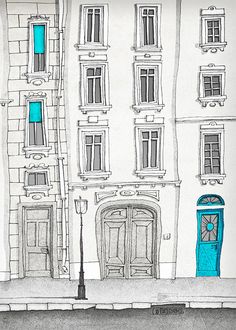
To offer a door or a mirror for the child reading my book.
So how do we writers do this with integrity?
By finding the places where we are the same as our characters, and finding the places where we are not. By connecting to our characters where that sameness resides (and connecting our characters to each other in a similar way), and by trusting ourselves to hold an empty space inside that we work to fill by listening and researching and being curious (and allowing our characters to have similar empty spaces inside for the same kind of journey.)
We need to know the borders we are choosing to cross as we make those journeys. The process of that knowledge is fluid and constant. The more we are curious, the more open we are, the more we venture into places that are not our own, the more we integrate all of that into ourselves. We need to integrate, but at the same time keep things distinct. It is a dance of sorts. Am I more suited to tell a story about flood victims because I have experienced a flood? Yes. Am I still a middle class woman who could borrow money from my family when I lost so much in that flood? Yes. Did many of the flood victims in New Orleans not have that privilege? Yes. There is part of that dance right here.***
If I am taking those journeys, then I know it is possible to take them, you know? And thus I am creating the opportunity for kids (my readers) to take their own, perhaps similar, journeys.That means everything to me.
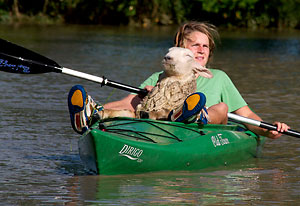
One of my favorite photos from Irene, taken by Jared Katz. Talk about a journey…
Back to Another Kind of Hurricane, and Zavion and Henry, and my experience with Tropical Storm Irene: it was all an accidental gift; a humble journey of finding connection despite (and alongside of) differences. Is there a way to consciously leave space inside of ourselves for those kinds of gifts? Is there a way of holding tight, as we write, to the threads that connect us all? Because those are gifts too.
I don’t know if this adds anything new to the diversity conversation. But I do know it’s something I want to continue to explore. What do you think about it all?
* * * * *
*Originally from my post over at Emus Debuts.
**I am only going to use quotes around diverse once. But I want to use them a lot! It is such a loaded word. Take it to mean many things – racial, social, gender-based, ability-based differences; also differences in experiences and environments and many other things as well.
**I am only going to use quotes around diverse once. But I want to use them a lot! It is such a loaded word. Take it to mean many things – racial, social, gender-based, ability-based differences; also differences in experiences and environments and many other things as well.
***This is a riff off of a great essay that Mitali Perkins wrote over at CBC Diversity.
* * * * *
Gratefully yours,
Tam


