One of us lives on the east coast. One of us lives on the west.

One of us lives in a rural community. One of us lives in a city.

Both of us wander. Both of us witness. Both of us write.

This is a record of what we find.


Thursday, August 11, 2011

Landscape of the Mind

I just finished reading Mockingbird. Extraordinary. Kathryn Erskine gets inside the landscape of Caitlin’s mind the way an archeologist gets inside the earth. Digging carefully and deeply around the treasured object.


In Caitlin’s case, the treasured object stuck and hardened inside her mind is emotion, I believe. It is trapped by her idiosyncratic behaviors and coping mechanisms: isolating herself, her lack of social skills, her inability to define anything that isn’t literal. On the outside, Caitlin’s actions and reactions appear disconnected. I understand this, as a reader, because Kathryn has created many scenes between Caitlin and other characters. But what I also understand, as that same reader, are Caitlin’s thought processes. I am privy to the way she thinks and the way she strings information together and the conclusions she draws. Chapter by chapter, Kathryn hunkers down and journeys just a little further into that rich and muddy earth of Caitlin’s mind. She doesn’t walk away into someone else’s perspective. She doesn’t look away, even for a moment. She is focused and determined and, more than anything else, she excavates with a loving hand.

When my running partner, Kara, and I stop at the edge of the river trail to let the dogs swim—when we look out on the rock ledge that bridges the trail and the water, when we watch the sun hit the water and turn into tiny sparklers of light, when we gaze beyond the river to the pine forest hillside in the distance—we are, more or less, seeing the same landscape. More than that, we are feeling the same landscape. Feeling the same heat of the late morning sun, feeling the same drops of water on our ankles when the dogs bound out of the river and shake, feeling the same burst of energy from the momentary rest and recharge.

But we—none of us—can see or feel inside the landscape of someone else’s mind. We can try. And I believe it is, perhaps, the most important thing we can try. But it is hard work. It is murky and thick and hard to navigate.

Kathryn Erskine gives us a critical lesson in Mockingbird.

A tool that can help bridge the space between one mind and another.

One heart and another.


Tam Smith

Thursday, August 4, 2011

Islands of Sanity

I haven't always lived in the city. In my early 20s, I lived on an island, Orcas Island, in the San Juans off the northern coast of Washington State. I refer to it as my homesteading period. 

I had gone from a tiny private high school to a huge university and by the middle of my sophomore year, I was feeling overwhelmed. When a missed tuition snafu made me lose my registered classes, I dropped out, rented a lovely hand built cabin on Orcas, went to the pound and chose a canine companion, talked an ex boyfriend into loading up all my stuff into the back of his pick up truck, and moved.

My life on Orcas felt perfect. I made friends with the librarian and planted a garden on half an acre of her five hundred acre plot. I read and wrote and crocheted backpacks (!!!) to sell at the local gift shop where I worked. I cooked a goose in my wood burning stove and made goose grease cookies. I made sour dough bread, filled up dozens of sketch books and fell in love with a boy who was a wood carver and kept us fed on abalone and venison.

I was barely twenty-one when the librarian told me she was ready to retire. She offered me the job ( it was a teensy rural library and didn't require a degree) and then she and her husband amazingly, generously offered me a hundred year lease on five acres of their land at a dollar a year, if I wanted to built a house. I could raise goats, something that sounded great to me at the time. But. I hadn't finished school. I hadn't really lived much of my life yet. This generous, tempting offer felt suspiciously like early retirement.

And so, once again, I moved, this time to Bellingham where the college appealed more to my comfort level. After finishing up my degree, I moved again, this time to Portland, a little bigger, but still a city with a human scale. And then I moved to San Francisco, where I eventually met my wonderful husband, raised my girls and learned to be an urban dweller.

I still need my islands, quiet places where the city hum fades away. We're extremely fortunate to live in a place where the wild, windswept Marin Headlands are less than twenty minutes by car, the Mt. Tamalpais watershed just over half an hour drive. 

But I also have a number of 'islands of sanity' that I visit daily, weekly. Every morning, I walk my Sheltie three and a half blocks to Michelangelo Park, a sweet haven of grass and garden tucked into the middle of a quiet block of apartment buildings. Often, we're the only ones there besides a group of chattering wild parrots.

Strawberry Island in the middle of Stow Lake in Golden Gate Park is another of my havens. The city recedes as we climb the dirt path that circles up to the top of the waterfall; the loudest disturbance is my crazy dog, Emma, who is convinced there is a gurgling monster that lives in the bottom of a cistern by the pond.

I make monthly pilgrimages to the labyrinth in Grace Cathedral four blocks from my house. On certain afternoons, the practicing organist is the only other corporal presence, as I slowly wind my way in and out of the meditative path.

And then there is the DeYoung Museum. On the second floor is a sacred space, a room filled with old masks, wooden gods and mysterious, numinal relics from other worlds. There is a particular silence in this dimmed space that calms and nourishes me.

But the island that is my real haven is my work space at home. When I sit down at my desk to write, the busyness outside stills and I am completely immersed and transported to my world of words and story. The traffic noise, the fog horn, the cable car, the voices and barking dogs, all dissolve. In fact, I was so 'lost' in a scene I was working on a few months ago, that I failed to notice the movie shoot outside my window. It wasn't until I got up to make a cup of tea that I glanced out and recognized Jude Law with a plastic helmet on his head! (Sanity or insanity?)

Where are your islands of sanity?

Sharry

Thursday, July 28, 2011

The Landscape of Quiet

I have been thinking a lot about quiet lately. In particular, I have been intrigued by the relationship between quiet and not-quiet. Meaning: in order to speak, or to think, or to create—to be, in essence, not-quiet—do you need to be within a quiet landscape? Do you need to be inside of that stillness and silence to allow the inside of you to be creative and wild and loud?

I lived in Brooklyn for eight years. And I loved it. The smells of tomato sauce and garlic and roasting coffee beans permeating my block. The banter between the two women who lived a few doors down from me—they kept a running commentary on who passed them on the street from their folding chairs. The deep red of the old brick buildings and the smooth carved details of the brownstones. The roar of the subway, the bright lights of the restaurants at night, the constant stream of people on the street. (Think Wow! City! by Robert Neubecker.)

In every possible way, Brooklyn was loud. Crazy and amazing loud, coming from every direction—smells, sounds, sights—so that in any given moment my intake of breath was chock full of just so much. It created a constant humming within me. I felt awake. I felt bursting with inspiration and ideas. I felt alive.

I was working as a teaching artist at the time, so I spent most of my days with elementary school children, in their classrooms, creating poems and plays and murals with them. I was also a playwright, so when I wasn’t working, I was writing a new play, or in rehearsals for a play I had already written.

For a while, I was productive in both places. I was able to nurture and gently guide my students and generate ideas and pages for my plays.

But then it all sort of stopped. I was tired. I couldn’t move. I couldn’t think. I couldn’t speak. And what I felt most of all was this awesome sense of cacophony. Every cell in my body was humming so loudly I couldn’t find myself anymore.

And now, all these years later, I am wondering if the reason I lost myself was because I had lost my landscape of quiet. That still and silent place from within which I could be creative and wild and loud.

I still adore Brooklyn. (In fact, I haven’t been back in two years and I am seriously jonesing for a visit!) But I am curious. How do the people who live there find the quiet they need? And in particular, how do the writers find that quiet?

What is the landscape of quiet for you?

Tam Smith

Thursday, July 21, 2011

Stranger in a Strange Land

I have been doing research for my WIP—a novel set in the 1870’s on San Francisco’s Barbary Coast. Which is basically where I live. So I am writing about a fictional character, a fifteen year old girl, who walks the same paths that I walk everyday, only Lucy is walking them a hundred and thirty-seven years earlier.

My wanderings have gone from observing the sights, sounds and smells around me, to imagining the residual echoes and ghostly impressions lingering along these paths from years ago, when many of the streets were mud and the acceptable standards of sanitation were a good deal lower. It’s like I have this time machine inside my head, recreating a previous era layered over intimately familiar territory.

In 1875, San Francisco was new and rough and wild, bawdy and extreme. People who had poured into California for the gold rush now filtered on down to the city where anything and everything went on. In many ways, the city has maintained this reputation despite the many civilizing factors.

Much of the original architecture from that time was destroyed in the 1906 earthquake. The Palace Hotel opened in 1875 (with 600 guest rooms!) and fell in 1906, only to be rebuilt first as a temporary building and then as the grand hotel that stands today. Earthquakes still threaten contemporary architecture, but we have learned how to and how not to build for earthquakes. Brick is not a good choice for building material.

Although,  I recently went to visit and do some research at the Chinese Historical Society of America’s Museum in Chinatown—a beautiful brick building designed and built by Julia Morgan in 1932.  We have had a number of earthquakes since then and it is still standing.

 
Part of what I am researching is about the immigrant experience—a topic that has always fascinated me. Up until recently, my main source of information has been through Amy Tam’s many novels—I always prefer to get my facts from fiction. But I think my favorite book about the immigrant experience is Shaun Tan’s The Arrival, a wordless book whose whimsical images act as visual poetry to convey an existential experience directly to the soul. The images make it a universal adventure accessible to everyone. 

I mean, who can’t relate at some point in their life to being a stranger in a strange land?

Sharry

Thursday, July 14, 2011

The Landscape of Waiting

I have been deep in thought about the process of waiting. Remember the way Dr. Seuss describes it in Oh! The Places You’ll Go!—

        Waiting for a train to go
        or a bus to come, or a plane to go
        or the mail to come, or the rain to go
        or the phone to ring, or the snow to snow
        or the waiting around for a Yes or No
        or waiting for their hair to grow.
        Everyone is just waiting.

The Waiting Place. I can relate. To me, the process of waiting feels much more like a landscape than a passage of time. And because I am waiting for something that I want; because I am waiting for something that I have already expended a lot of time and energy and heart on, my waiting landscape is a stormy ocean. Imagine a rocky beach (I am thinking of one I visited on the west coast of Victoria BC.) White capped waves crashing onto the shore. A dark grey sky blurring into a slightly green, dark grey ocean. And I am standing up to my waist in it. Salt water burning my eyes and throat. My leg muscles weak from keeping me upright. Those monster waves are, of course, my anxiety, my hope, my fear that I won’t get what I want. This is my Waiting Place.

Or it was.

As I said, I have been thinking much about this. It behooves me to do so. I seem to spend a lot of time waiting. Maybe we all do. And here is what I have figured out: Where you stand within a landscape makes all the difference. It is not necessary—or even possible—to stand for very long in that kind of storm. It is also equally unnecessary—and equally impossible—to leave the storm all together. But I have finally tried stepping back. So that the waves only wash over my feet. And so that by the time they get to me they are low and slow.

It makes an incredible difference. For one thing, although the waves still rage on I am not fighting with them anymore. And for another thing, when I move back to the edge of the water, I can do other things within the landscape. Make a sand castle. Go for a run on the beach. Collect shells. You know what I mean. I can engage in something other than waiting….and other than fighting waiting.

And then from that place, in some strange and beautiful way, I can appreciate the storm. My hard work. My desire. My love. My hope.

Tam Smith

Thursday, July 7, 2011

Back From The Brink


Last Tuesday morning I got the call from Deaconess Hospital in Spokane, Washington that my mother was very ill—the result of a tick bite that had caused a bacterial infection in her bloodstream and then a reaction to the administered antibiotics. I was on a plane from San Francisco that afternoon.

I arrived at ICU around midnight and made my way through the landscape of hospital corridors and maze of gatekeepers to her darkened room where she was conscious although drifty, and attached at every orifice to pumps and tubes that hummed, glugged, buzzed and beeped, bringing her back from the brink. I kissed her, stroked her face and held her hand as she told me she was glad I was there, but that she was ready to go. That she’d had a good life, but she was tired. I told her I didn’t think it was her time yet, and although she was ready, the rest of us weren’t ready to lose her. She sighed and drifted off to sleep. I went out to find the nurse and get an updated report on her condition.

As I wandered the seemingly abandoned podular hallway that circled the rooms, I experienced a small shiver, sensing the residual presence of all the souls that had passed through the twilit space on their way from this world to the next. I wondered at the traumas that had brought the other patients into ICU and about decisions made, not only by the doctors and nurses and family members of the ICU patients, but also of the individuals themselves—whether or not to stay or go.

I thought of Gayle Forman’s IF I STAY, of Mia’s out-of-body journey after she’d lost her family—of how she watched herself and the efforts of those around her to bring her back to life when she wasn’t sure she wanted to stay. The story had a big impact on me and I have thought often of the hard choice she made and wondered at what had happened after.

After being reassured by the nurse that my mother should make a full recovery, that the crisis was behind us, I went to check into my hotel room. Once I settle in, I downloaded WHERE SHE WENT, the follow up story to IF I STAY, onto my iPad. Over the next few days, as I watched my mother gather strength, rekindle an interest in sticking around for a while. and grow strong enough to go to a skilled nursing facility to do some physical therapy, I took breaks and read the story of the fallout from Mia’s decision, told from Adam’s (Mia’s heart-throb musician boyfriend) point of view. If you haven’t read it, (then you HAVE to! Read them both!) I don’t want to give it away, but I think I cried even harder. Good cathartic tears. 

I am so grateful for stories that work their way into my heart and help me to understand emotionally complicated situations by showing how others might navigate their own traumatic landscapes.

Sharry

Thursday, June 30, 2011

Guest Post: Jenny Ziegler and her new novel Sass & Serendipity

We are thrilled that Jenny Ziegler, friend and Tam's agent-mate, has come on over to share her new novel Sass & Serendipity's rich landscape with us!  Sass & Serendipity comes out into the world on July 12, 2011.


KTE: Welcome Jenny!  What is one landscape that inspired, or is featured in, Sass & Serendipity?


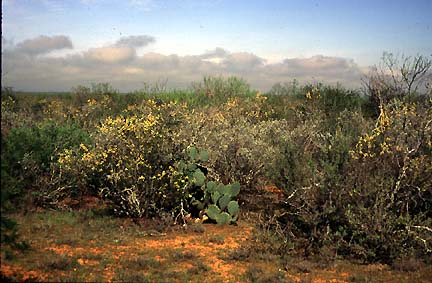
Jenny: The book is about two sisters growing up in Barton, Texas.  The town is fictional, but the environment, the South Texas Plains and brush country, is very real.  I love the wild, tough, scrubby beauty of the region – hot and humid, crisscrossed by arroyos and streams, and blanketed with thorny bushes, cacti, grasses and hardy wildflowers.  There’s something about the untamed land and steamy heat that make it the perfect setting for one sister’s scorn and the other’s heady, romantic notions.

KTE: Can you share an excerpt from the book that shows this wild land and heat?

Jenny: Sure!  Here’s a descriptive passage from Sass & Serendipity:

As they crossed the small footbridge over Chandler Creek, she caught sight of their dim reflection in the water below. There they were. The two of them. Side by side. Her big mass of dark tresses and red T-shirt, and his russet-colored hair and green button-down. The images were all wavy, almost dreamlike. Daphne hadn’t even realized she was smiling until she saw her white teeth shining back at her on the rippling surface.

Luke stopped, rested his forearms on the wooden rail of the bridge, and gazed upstream. “Wow. This place is so cool,” he said, gesturing toward the water, the live oaks on the shore, and the cluster of nineteenth-century storefronts on the street beyond. “Small but nice.”

“It is,” Daphne agreed. She’d never fully appreciated how special her town was, but Luke was right. For some reason, it seemed extra pretty right now. She loved how patches of light danced on the ripples below and the way the live oaks bowed reverently toward the water. Beyond the trees she could see the very tops of Main Street’s buildings, with their dates of completion etched below their curvy rooflines. 1898. 1901. 1903. The smell of brisket from Hawthorne’s Barbecue comingled with the scents of caliche and pecan buds and fresh grackle poop. There was even a sound track of local noise to go with the postcard-pretty scene: the trickling of the creek in its limestone bed, the whir of unseen cicadas, and the creaking of the weather vane atop the old, restored Grayson house, now used for the Chamber of Commerce.

KTE: Wow...that is gorgeous.  It is clear how vibrant that landscape is in your mind.  How important it is to you.
 
Jenny: I have family all over South Texas.  In fact, my lineage there goes back about three or four generations.  My grandparents’ families picked cotton and other crops, and my great-grandfather was the local curandero, or “healer,” in the town of Sinton.  So not only did I want this backdrop for my characters, I wanted it as a tribute to my family and culture, as well. 


Jennifer Ziegler is a YA novelist, speaker, and former English teacher.  Her novel How Not to Be Popular (Delacorte/Random House, 2008) was an International Reading Association’s Young Adults’ Choice, a Lone Star Reading List selection, and an ALA Best Books for Young Adults nominee.  Her next novel, Sass and Serendipity (Delacorte/Random House, 2011), gives Jane Austen a small-town Texas spin.  You can find Jenny at jenniferziegler.net.